

Table of Contents
- Why Most Boys Graphic Tees Fail by October
- Durable Boys T-Shirts for School: What Actually Holds Up
- School Dress Code Compliance: What Graphic Prints Get Sent Home For
- Graphic Tee Outfit Ideas for Boys That Work for School and Skate
- How to Wash Graphic Tees to Prevent Fading
- Sizing, Growth Spurts, and Sustainability: Buying Less Often
- Frequently Asked Questions
Last Updated: September 28, 2026
Why Most Boys Graphic Tees Fail by October
The best boys graphic tees for school survive recess, gym class, and the bottom of a backpack. Most don't. Parents who buy on price alone end up replacing shirts mid-semester, which is why fabric quality matters more than the graphic on the front.
Here's the pattern: a shirt looks great in August, then the collar stretches, the print cracks, and the hem frays by fall conferences. Below, we'll break down what actually holds up, what gets sent home by the front office, and how to make a graphic tee last through the school year.
The core problem isn't the design. It's the construction underneath it.
Durable Boys T-Shirts for School: What Actually Holds Up
Durable boys t-shirts for school share three traits: heavier fabric, reinforced stitching, and a print method that bonds to the cloth instead of sitting on top of it. Skip any one of those and the shirt quits early.
Fabric Weight, Stitching, and Print Method
Fabric weight is measured in grams per square meter, and it's the number most shoppers never check. A flimsy tee feels thin and cool in the hand; a durable one has a little heft. For active kids, a mid-weight soft cotton with a tight knit resists stretching at the neck and holds its shape after repeated washing.
Stitching matters just as much. Double-needle hems and taped shoulder seams keep a shirt from twisting. A common mistake is judging a tee by how it feels on the hanger. In practice, the seams tell you more than the surface.
Print method decides whether the graphic survives. Screen print pushes ink into the fabric and tends to outlast cheaper heat-transfer prints, which peel after a few cycles. If a shirt's design feels like a plastic patch, expect trouble.
Shrink-Resistant and Colorfast Claims: How to Check
"Pre-shrunk" and "colorfast" are marketing words until you test them. A shirt labeled shrink-resistant should hold its size after a hot wash, and colorfast means the dye stays put instead of bleeding onto socks in the laundry.
Check the care tag before you buy. If it demands cold wash and hang dry only, the maker is telling you the fabric is fragile. A durable tee should tolerate a normal machine washable cycle without turning into a crop top.
School Dress Code Compliance: What Graphic Prints Get Sent Home For
School dress code compliance trips up more families than fabric quality does. Most districts allow graphic prints, but they draw a line at violent imagery, profanity, alcohol or drug references, and anything a school reads as disruptive or gang-related.
The rule of thumb: if you'd hesitate to show the shirt to a teacher, don't send it.
Graphic Tee Outfit Ideas for Boys That Work for School and Skate
Graphic tee outfit ideas for boys work best when one shirt does double duty: clean enough for class, tough enough for the skatepark after the bell. The trick is layering and pairing, not buying two separate wardrobes. What most style roundups skip is that the right outfit changes by age, a second grader and a seventh grader are dressing for completely different social rooms, even if they're wearing the same shirt.
An 8-year-old boy in stylish boys graphic tees holding a skateboard outside a school with a denim jacket.
Styling by Age: Elementary vs. Middle School
Elementary (roughly ages 5-10). Comfort wins every argument at this age. Kids this size sit on the floor, hang upside down on monkey bars, and stuff shirts into backpack pockets. A relaxed-fit short sleeve graphic tee with joggers or pull-on pants and a pair of hook-and-loop sneakers is the whole formula. Avoid long drawstrings on hoodies, many elementary handbooks restrict them as a strangulation risk, and they get chewed anyway.
Building Outfits Around the Graphic
Start with a relaxed fit tee in a neutral or bold color, then build around it. Cuffed jeans or joggers keep the look casual without looking sloppy. Slip-on skate shoes bridge the gap between school and session.
Layering Pieces for Cooler Mornings
Cooler mornings call for layering pieces that peel off by lunch. A hoodie, flannel, or denim jacket over a short sleeve graphic tee gives kids warmth at the bus stop and a wearable outfit indoors.
- Hoodie: easy on, easy off, hides a wrinkled tee
- Flannel: adds texture without bulk
- Denim jacket: tough enough for playground abuse
- Zip-up: best for kids who run hot
How to Wash Graphic Tees to Prevent Fading
Learning how to wash graphic tees to prevent fading comes down to three habits: cold water, inside out, and low heat. Heat is what kills prints and dyes, so keep it away from both.
A quick reference for keeping prints and color intact:
Problem |
Cause |
Fix |
|---|---|---|
Cracked print |
High dryer heat |
Air dry or low heat |
Faded color |
Hot water, harsh detergent |
Cold wash, mild soap |
Stretched collar |
Hanging wet |
Lay flat to dry |
Bleeding dye |
Mixed with light colors |
Wash with like colors |
Sizing, Growth Spurts, and Sustainability: Buying Less Often
Sizing for kids is a moving target. Growth spurts mean a tee that fits in September may be tight by spring, which is why buying fewer, better shirts beats stocking up on cheap ones. But "buy better" is only useful advice if you know what to look for on the tag, and that's where most graphic tee guides stop short.
Reading the Tag: What Actually Signals Longevity
Two shirts can look identical on a shelf and behave completely differently after twenty washes. The difference is usually in three places:
- Fiber content. 100% cotton is the baseline. A cotton-poly blend (often 60/40 or 50/50) resists shrinking and wrinkling better but pills faster and feels less breathable. For school-year wear, a mid-weight 100% cotton or a cotton-heavy blend (90/10 or higher) tends to hold up best.
- Fabric weight. Measured in grams per square meter (GSM), most kids' tees land between 140 and 180 GSM. Under 140 feels flimsy and stretches at the neck; over 180 can feel stiff and hot for active kids. The sweet spot for school is roughly 150-170 GSM.
- Certifications. Look for OEKO-TEX Standard 100 (tests for harmful substances) or GOTS (Global Organic Textile Standard, which covers organic fiber and processing). These aren't guarantees of durability, but they do signal a supply chain that's been audited rather than assumed.
Sizing Up Without Drowning Them
When in doubt, size up slightly. A relaxed fit gives room to grow and layers better under a hoodie. But "size up" has limits. A shirt two sizes too big will hang past the waist, catch on chair backs, and get pushed up constantly, which is how kids end up disliking a shirt they picked out themselves.
Why Fewer, Better Shirts Win on Cost and Waste
For families who want apparel that matches an adventurous, full-throttle lifestyle, the American Academy of Pediatrics guidance on active play reminds us that kids do best when they can move freely. Clothes that keep up with them matter.
Frequently Asked Questions
How do I choose durable t-shirts for boys who skate and surf?
Look for heavier cotton (around 5.5 oz or more), double-stitched hems, and screen-printed graphics rather than heat-transfer decals that peel. Check that the shirt is labeled shrink-resistant and colorfast, since active kids wash clothes constantly. Reinforced crew neck collars also matter because boys who skate grab and pull at the collar.
What are the most popular graphic tees for boys right now?
Bold screen-printed graphics dominate, including skate-brand-style logos, surf imagery, and abstract streetwear designs. Parents are moving away from licensed cartoon characters toward authentic subculture graphics that work for both school and weekends. Neutral base colors like black, heather gray, and navy with one or two bold print colors are the most versatile. Relaxed fits and crew necks remain the standard. Many families now buy graphic prints that reflect their kid's actual hobbies, like skating, surfing, or dirt biking, rather than generic designs.
How do you wash graphic tees to prevent fading?
Turn the shirt inside out before washing, use cold water on a gentle cycle, and avoid fabric softener, which breaks down the print bond. Skip the dryer or use low heat, because high heat speeds up both fading and shrinkage. Hang-drying graphic tees preserves the screen print far longer. If you must machine dry, remove the shirt while slightly damp. Wash graphic tees separately from rough items like jeans or towels that rub against the print. Following these steps can keep a graphic tee looking new for a full school year.
Will graphic tees look out of place at school, or can my son wear them every day?
Graphic tees work for most school days if you choose prints that fit the dress code. Avoid graphics with profanity, violence, or alcohol references, since many schools send kids home for those. A bold but clean design, paired with jeans or joggers, reads as casual and appropriate. Most schools allow graphic tees as long as the print is school-appropriate. Buying a few versatile designs means your son can wear them to class, then straight to the skate park without changing.
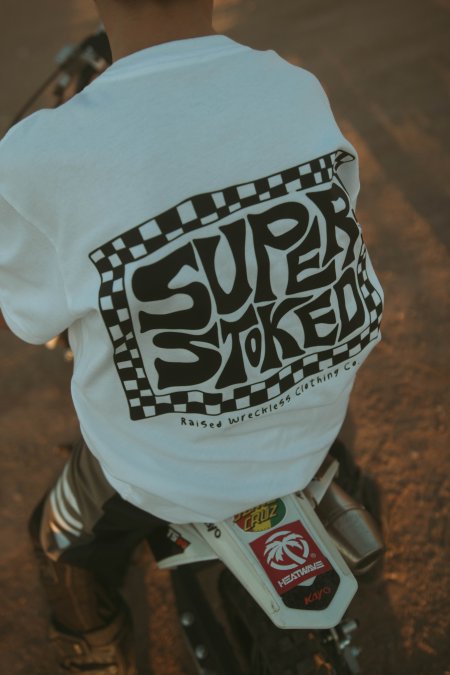
Most parents don't set out to buy disposable clothing, but cheap tees turn into exactly that by mid-semester. The fix is choosing shirts built for real abuse: heavier fabric, taped seams, and prints that survive the wash. Raised Wreckless makes bold graphic tees and streetwear for kids who surf, skate, and ride, with quality fabrics and durable construction designed to handle the chaos of daily adventures. Get started with Raised Wreckless and build a school wardrobe that lasts past October.